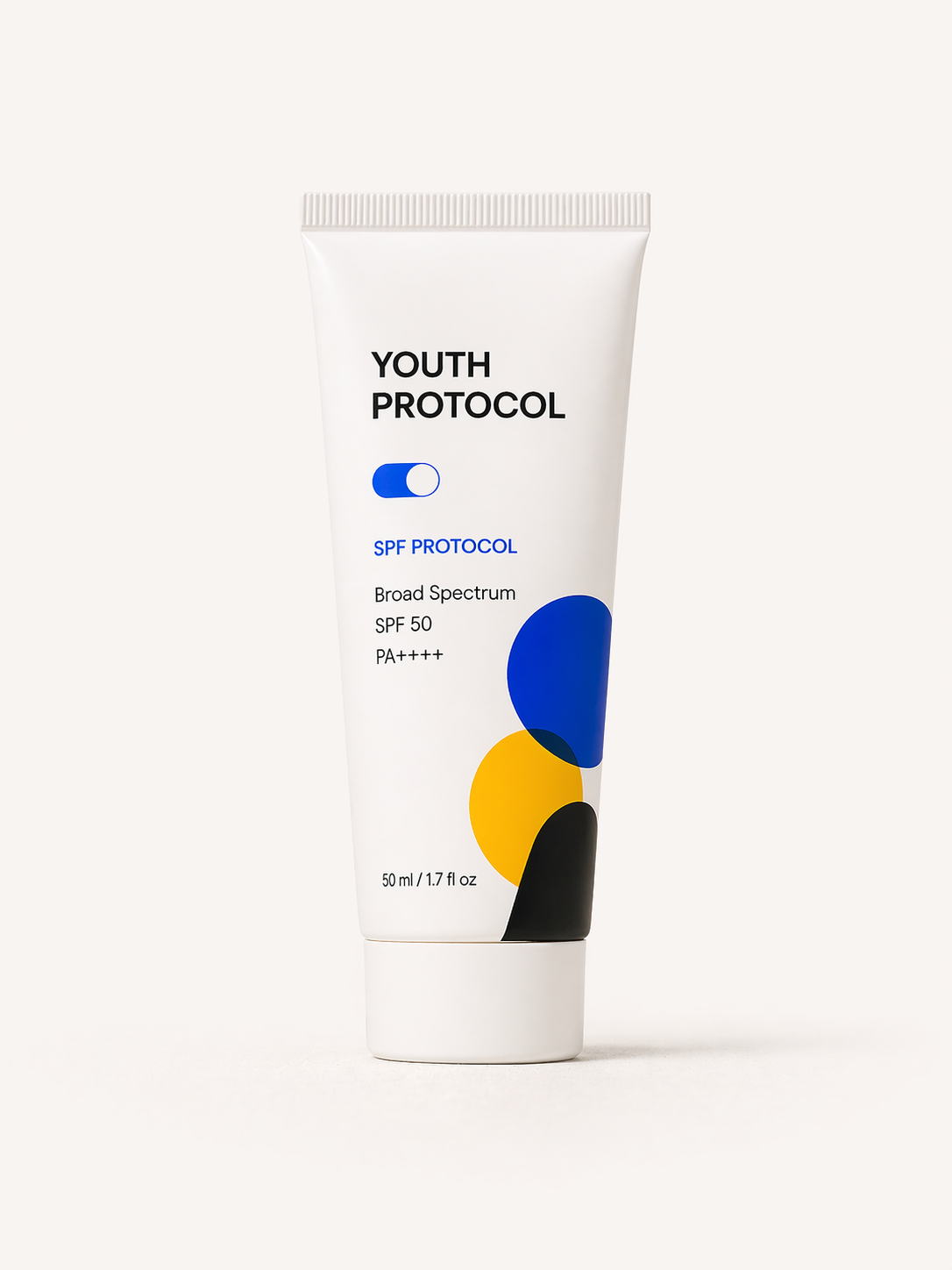
SPF Protocol.
Broad Spectrum SPF 50 · PA++++
Non-negotiable with prescription tretinoin. A mineral-based SPF 50 engineered to be invisible on skin, sit under stubble, and protect the work PM Protocol is doing every night.
The quietest step.
The loudest consequence.
Skipping SPF on a tretinoin protocol undoes the compounding. UV radiation degrades the collagen you're paying to rebuild.
Blocks UV-B (burn)
SPF 50 blocks 98% of UV-B — the wavelength that causes sunburn and direct DNA damage.
Blocks UV-A (aging)
PA++++ is the highest UV-A rating on the market. UV-A penetrates clouds, windows, and causes 90% of visible photoaging.
Preserves Rx outcomes
Tretinoin thins the stratum corneum temporarily, making skin 4x more photo-sensitive. Without SPF, the compound accelerates damage instead of reversing it.
Daily. Generously.
SPF is the one step where "enough" matters more than "perfect product." Two finger-lengths of product for the face and neck — anything less and you're getting a fraction of the SPF rating on the bottle.
Reapply every 2 hours of sun exposure. Cloud cover blocks only 20% of UV — rain or shine, SPF is the whole game.
After cleanser, after AM Protocol, before makeup if any.
One strip along each pointer finger. Covers face + neck. Less = less protection.
Beach, hiking, driving. The SPF rating decays with sweat and abrasion.
UV-A passes through windows. If you're near a window 4+ hrs, apply once in the morning.
Answered.
Can I use my existing sunscreen instead?+
Yes, as long as it's SPF 30+ and broad-spectrum. Most drugstore sunscreens are fine. SPF Protocol is tuned specifically for skin on retinoids — lighter texture, no alcohol, non-comedogenic — but if you already have one you love, keep it.
Chemical or mineral filter?+
Hybrid — a combination of non-nano zinc oxide (physical) and new-generation organic filters. Best of both: broad coverage, elegant texture, no white cast.
Will it break me out?+
Non-comedogenic, fragrance-free, alcohol-free. If you're prone to acne, the chance of reaction is low — but if you have a specific sensitivity, message Dr. Chen first.
Reef-safe — what does that actually mean?+
Formulated without oxybenzone and octinoxate — the two chemicals banned in Hawaii, Key West, and parts of the Caribbean for damaging coral reefs. Non-nano zinc means no particles small enough to be ingested by marine life.
Ready to toggle on?
Start your intake.
Two minutes. Clinician reviews in 24 hours. You pay nothing until approved.
The clinical data.
SPF Protocol is not optional with Rx tretinoin. Here's why daily broad-spectrum SPF is non-negotiable.
Selected peer-reviewed references. Full bibliography available in your patient portal.